End Mills


CA$17.27
excl. taxes
CA$12.22
excl. taxes
CA$12.70
excl. taxes
CA$14.95
excl. taxes
CA$12.41
excl. taxes
CA$7.00
excl. taxes
CA$13.72
excl. taxes
CA$8.62
excl. taxes

CA$17.27
excl. taxes
CA$12.22
excl. taxes
CA$12.70
excl. taxes
CA$14.95
excl. taxes
CA$12.41
excl. taxes
CA$7.00
excl. taxes
CA$13.72
excl. taxes
CA$8.62
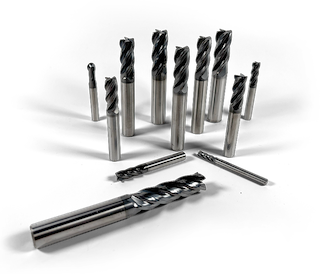
excl. taxesEnd mills do most of the metal removal in a milling shop, and the type you pick changes surface finish, tool life and cycle time. Flat (square), ball nose, corner radius and chamfer each have a job they are good at. This page covers what the differences mean in practice and what we stock.
The profile you choose has a direct effect on surface quality, tool life and how hard you can push the cut. Below are the profiles we stock and where each one belongs.
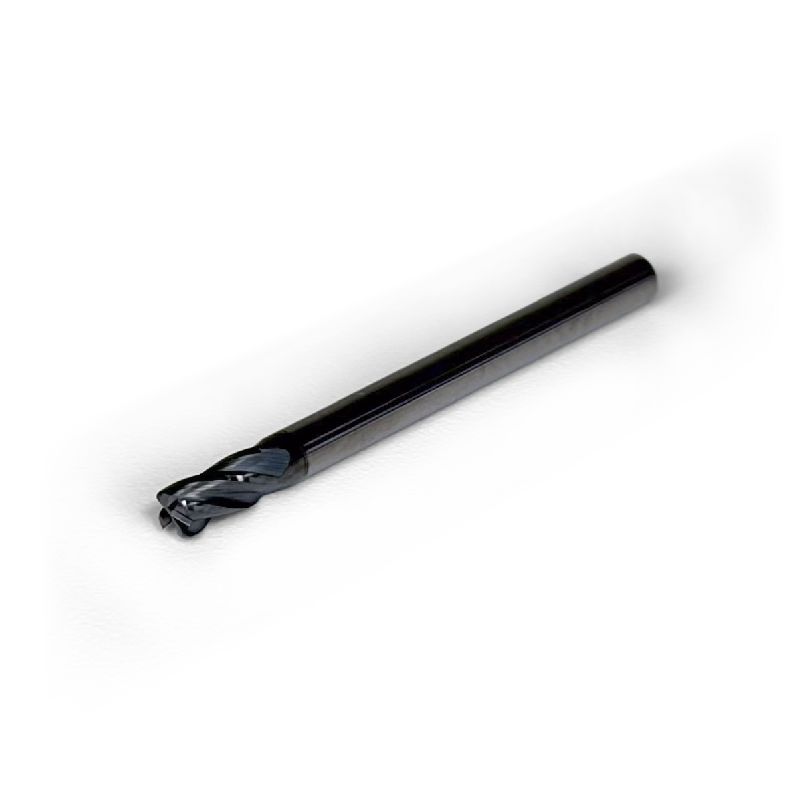
Square (flat) end mills cut a flat bottom and a true 90 degree corner. They are the default choice for slotting, side milling and general work, and they run in everything from aluminum to hardened steel.
Flute count and shank diameter matter more here than most people expect. More flutes give a better finish and let you push feed, but leave less room for chips - which is why aluminum wants fewer flutes and steel tolerates more. A larger shank relative to the cut adds rigidity and reduces chatter on deeper passes.
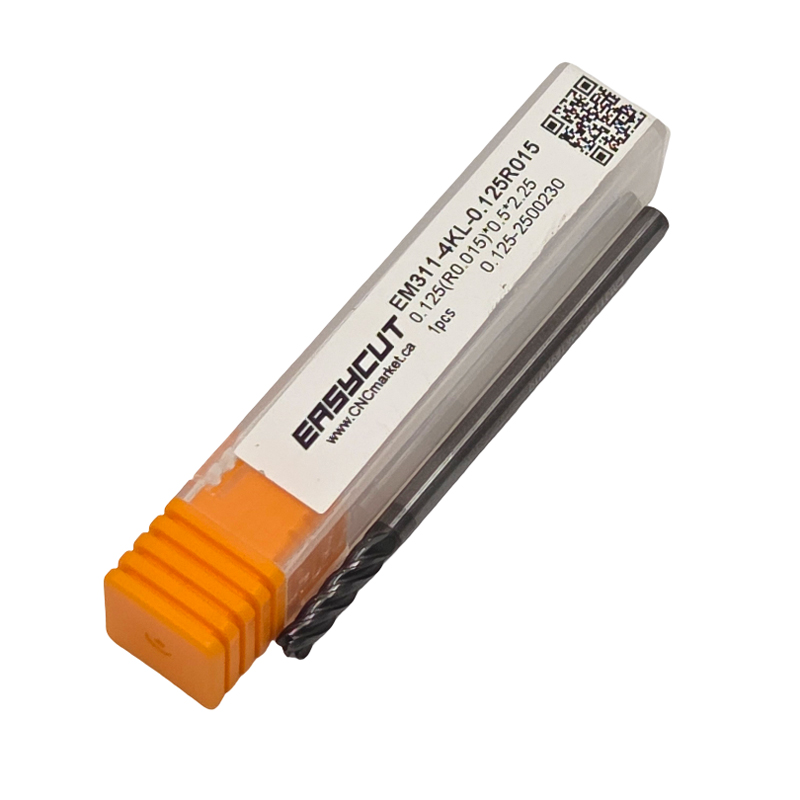
A corner radius end mill is a square end mill with the sharp corner replaced by a small radius, typically R0.010" to R0.030". That corner is where a square end mill usually fails first, so moving load off it is the cheapest way to extend tool life in steel, stainless and heat-treated material.
The trade-off is the radius it leaves in the corner of your pocket or shoulder. If the print allows it, a corner radius tool will outlast a square one doing the same job. If you need a sharp internal corner, use square.
Ball nose end mills have a full radius tip for contoured and 3D surfaces - mould and die work, sculpted geometry, finishing passes. Cutting pressure stays consistent as the tool follows a curve, which is what gives the surface finish. Note that cutting speed drops to zero at the very tip, so a small step-over and a tilted tool axis, where the machine allows it, both help.
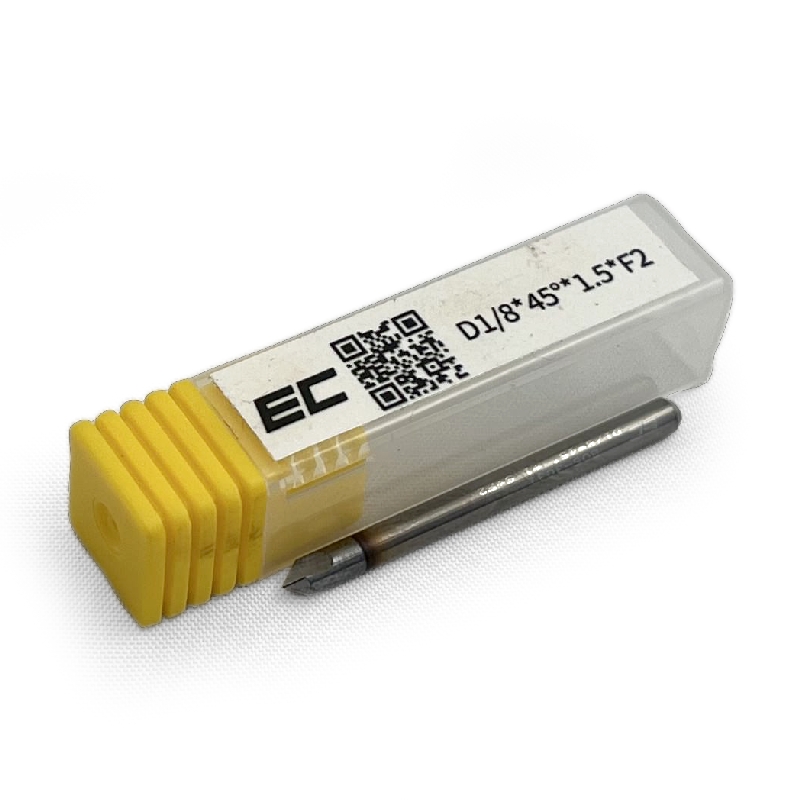
Chamfer end mills cut angled edges at a set included angle, usually 45 degrees on general work. They are used for deburring, breaking edges and preparing parts for welding or assembly, and they double as spotting tools for drilling.
A drill mill has a pointed tip with cutting edges that continue up the side, so one tool spots holes before drilling, cuts chamfers and countersinks, engraves and mills shallow V-grooves and profiles. On a machine with a full tool magazine it can take the place of a spot drill and a chamfer mill.
The point angle decides the job: 90° for 45° chamfers and countersinks, 60° for narrower V-grooves, engraving and centre holes. We stock two U.P. TOOL drill mills, both two-flute and uncoated: a 3/8" with a 60° point and 1" length of cut and a 6 mm with a 90° point and 25 mm length of cut.
Solid carbide holds its edge at temperatures and speeds that soften high-speed steel. In practice that means fewer tool changes, higher feed rates and more predictable tool life - especially in stainless, titanium and heat-treated alloys where HSS gives up quickly.
Carbide is also stiffer than HSS, so deflection is lower and hole and slot geometry stays truer on deep cuts. The trade-off is brittleness: carbide does not bend, it chips. Rigid setups, correct speeds and feeds and consistent chip evacuation matter more with carbide than with steel tooling.
Match the geometry and coating to the workpiece material, not just the diameter. Clamp short - stick-out is the single biggest cause of chatter and broken tools. Keep the feed up: rubbing at low chip loads work-hardens stainless and destroys the edge faster than cutting does.
Use coolant or air where the material calls for it and make sure chips are leaving the cut rather than being recut. Inspect the corners for wear and replace before the edge breaks down - a worn cutter costs more in scrap and spindle time than a new one costs to buy.
Five parameters decide the tool:
Reach matters too. Where the cut is deeper than a standard flute length allows, an extended-neck version keeps the shank clear of the wall instead of forcing a longer tool.
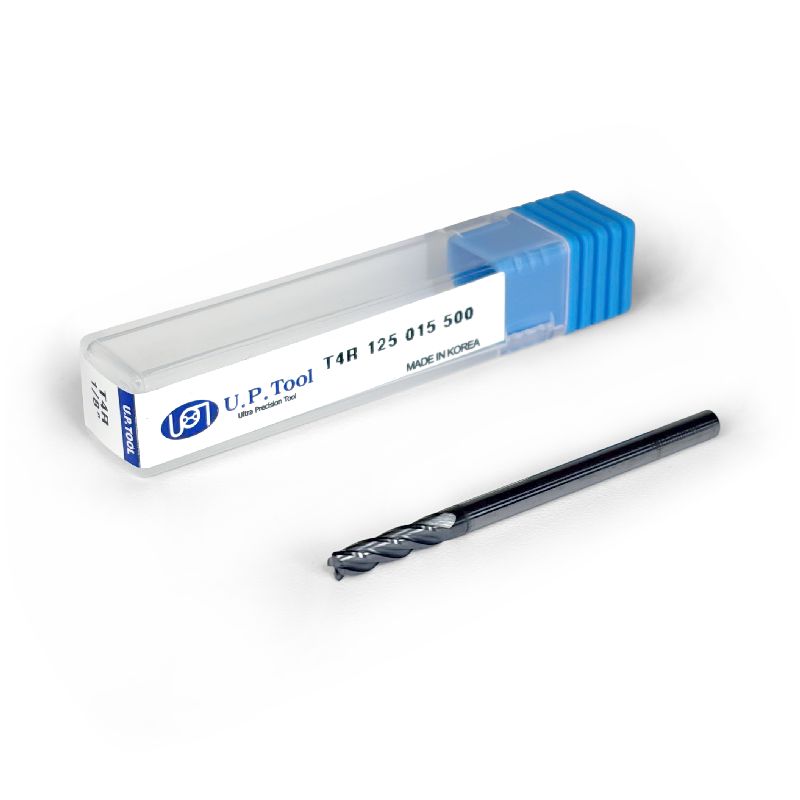
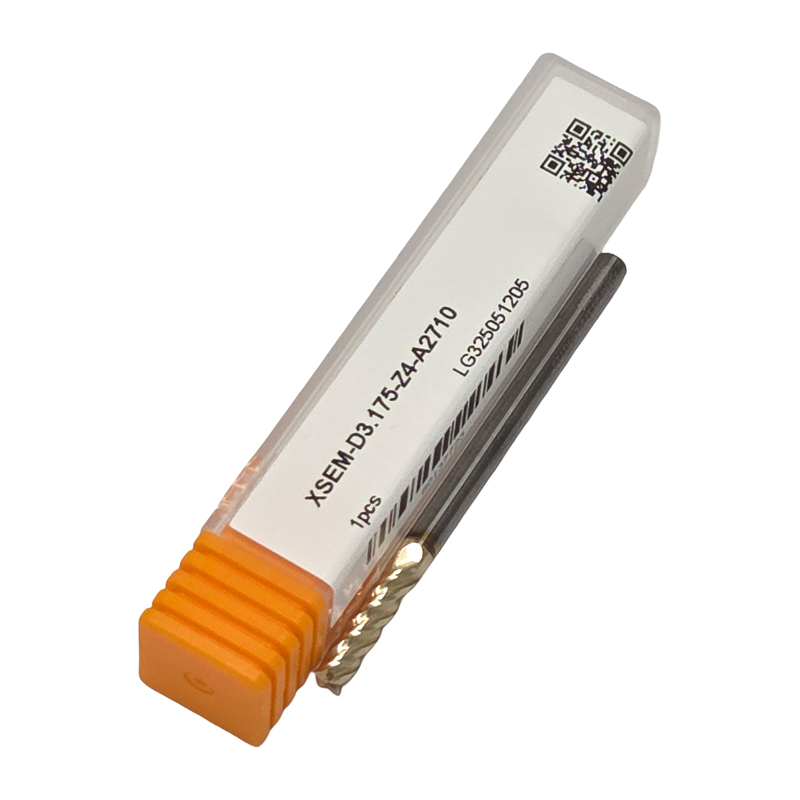
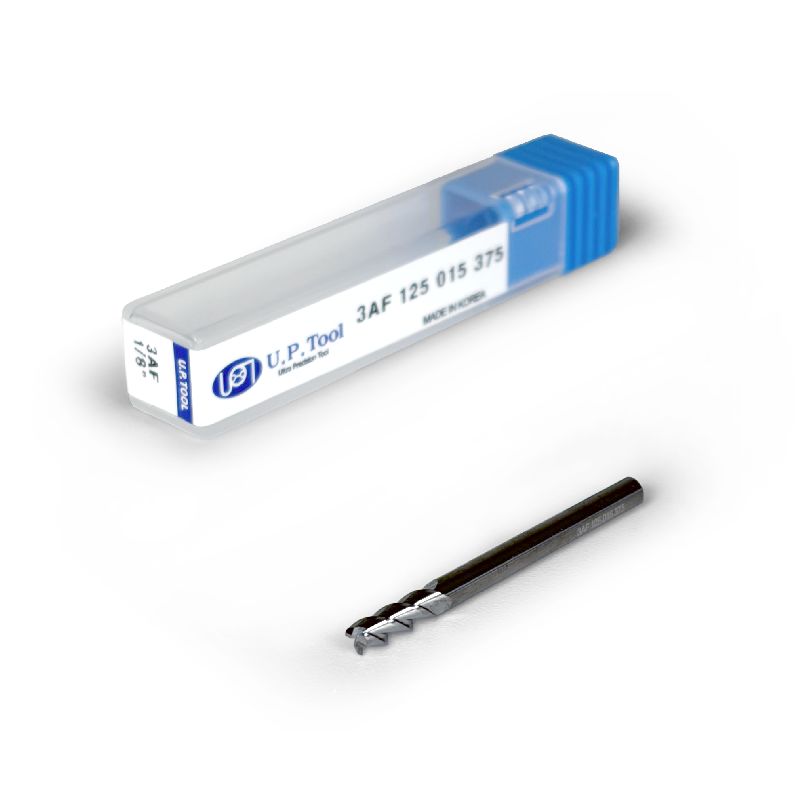
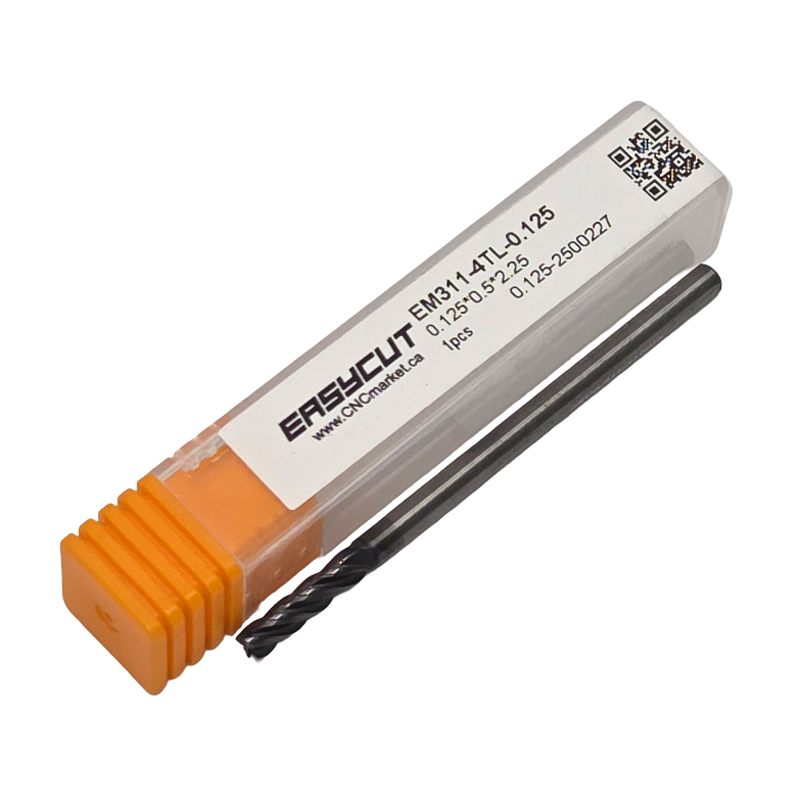
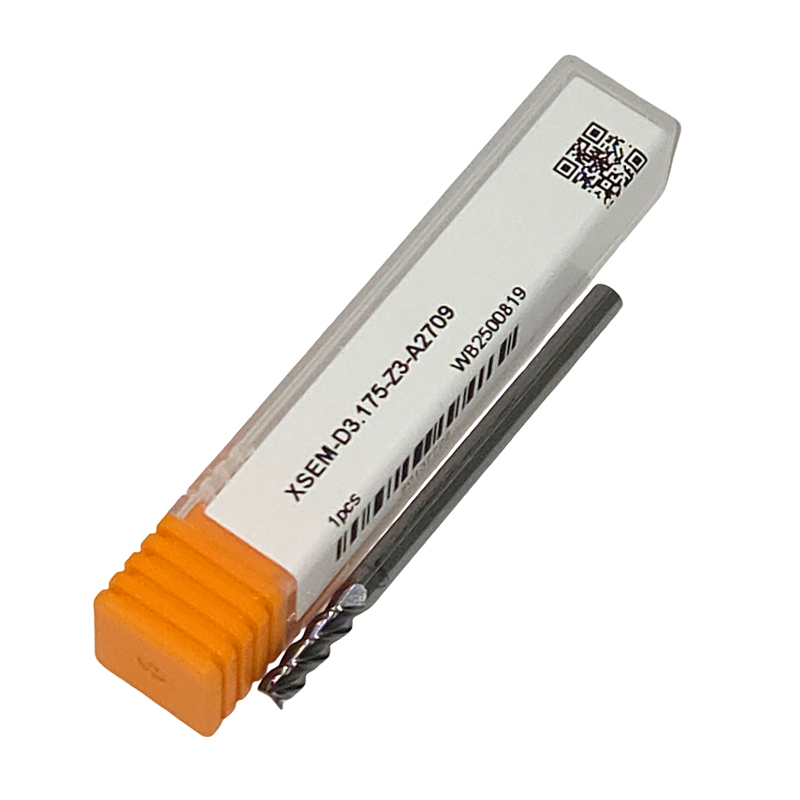
We stock solid carbide end mills in Canada under two brands - U.P. TOOL, made in Korea, and our own EASYCUT. Inch diameters from 1/8" to 1/2", two to five flutes, square, corner radius, ball nose and chamfer, in AlCrN, AlTiN and TiCN coatings or uncoated for aluminum.
Prices and stock are shown on every product page, and you can order online without waiting for a quote. Shipping is free anywhere in Canada.
We also run our own machine shop in Calgary and cut with these tools ourselves, so if you are not sure what suits your material or your machine, send us the job - we will tell you what we would put in the spindle, and we can supply the cutting data to go with it. If you need something that is not listed, send us the code or the drawing and we will source it.